
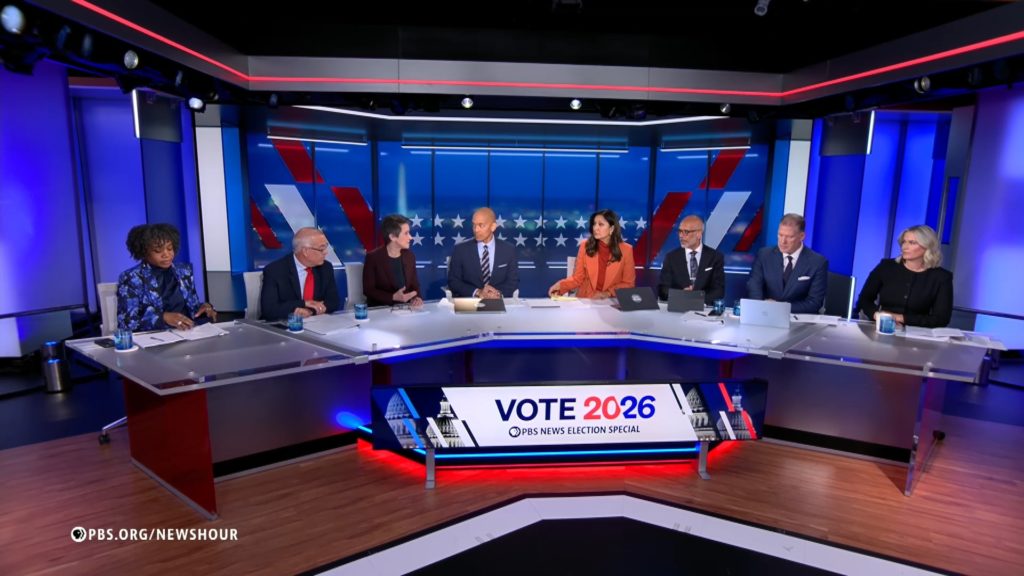
PBS News opened its election night coverage with a panel of analysts and strategists from both parties. Their early read was that the economy and frustration with President Donald Trump were shaping the vote.
Hosts Amna Nawaz and Geoff Bennett were joined by Amy Walter of The Cook Political Report, The Atlantic's David Brooks, Boston Globe columnist Kimberly Atkins Stohr, Democratic strategist Mo Elleithee, Republican strategist Doug Heye and former Washington Senate candidate Tiffany Smiley, a Republican.
Walter pointed to early AP Voter Poll data. It showed 39% of voters named the economy as their top issue, with high gas prices a big factor. The same survey found 43% said they voted to express opposition to Trump, compared with 16% who voted to show support.
Smiley said Trump has worked hard to drive out his voters. She argued that Democrats lack leadership and that many people were voting against Trump rather than for anyone. The question, she said, is whether Trump voters would be as fired up as in 2024.
The poll also found voters trusted Democrats more on the economy, foreign policy, health care and government corruption, and trusted Republicans more only on immigration. Elleithee said he could not remember Democrats leading on the economy and foreign policy. He noted the party could win a majority of governorships for the first time in decades.
Heye said Trump's approval has not started with a four in a long time. He argued that Trump's closing message had made it harder for Republican candidates to talk about lowering prices.
Brooks noted that the president's party usually loses seats in midterms. He said he was struck that 54% of voters called government corruption crucial to their vote. Atkins Stohr said voter anger was aimed at the establishment as a whole. She added that most voters also held an unfavorable view of the Democratic Party.
Sources: PBS News, The Associated Press