
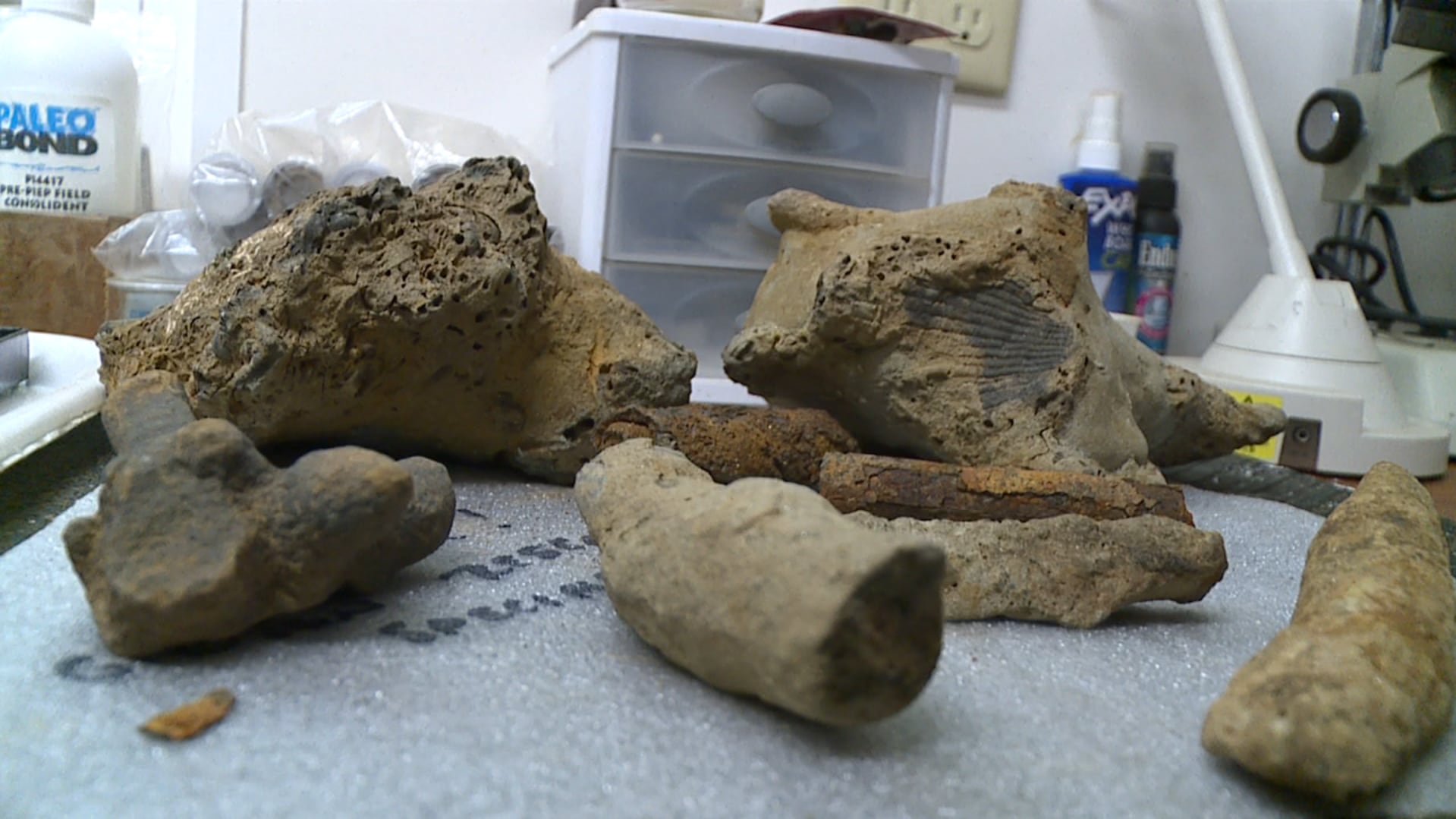
Long before the creeks and hardwoods of McNairy County took shape, the ground at Coon Creek Science Center sat beneath an ocean. That ancient sea left behind a fossil record that still draws families, students and curious visitors to the UT Martin-run site.
During the Cretaceous Period, while dinosaurs walked land farther west, marine animals swam over what is now West Tennessee. Their remains are still buried in the soil and creek beds at Coon Creek, and visitors are invited to dig them up.
Program director Joshua Ratliff told WBBJ that marine snail fossils are among the most common finds, in many varieties. He said guests sometimes wonder whether they will turn up anything at all, but the site is so rich in material that, in his words, "you cannot not find it."
Bigger surprises do happen. Ratliff said a student found a mosasaur tooth in the creek in May, and that student's name stays attached to the specimen wherever it travels.
Nobody has to wade into the water to take part. The center also has a Fossil Mount where children and adults can dig and learn about the creatures that once lived in the region.
Inside, visitors can see a life-size cast of a mosasaur skull. Ratliff explained that the original skull used to make the cast came from Kansas, but the same kind of sea reptile has also been found at Coon Creek.
The science center opens its grounds to the public for fossil digs every third Saturday of the month. Visits require an appointment made ahead of time.
For West Tennessee families looking for a hands-on outing, the site offers a rare chance to hold a piece of the region's deep past and see how different this corner of the state looked millions of years ago.
Sources: WBBJ; UT Martin Coon Creek Science Center